

Turn your grid into a workflow you can run anytime
Try Bitscale Now!
What a grid means in Bitscale
A grid is how Bitscale represents a workflow.- Each row is an entry (example: a person, a lead, an account)
- Each column is a step in the workflow (example: find email, find phone, enrich account)
- finding emails and phone numbers
- account enrichment
- outbound creation
- outbound automation
Run a grid manually
There are four manual ways to run a grid, depending on what you want to process.1. Run a single cell (one step for one entry)
Use this when you want to run just one step for one specific row.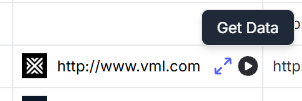
- Hover over the cell you want to run.
- Click the run option for that cell.
2. Run an entire row (all steps for one entry)
Use this when you want to fully process one entry across every step.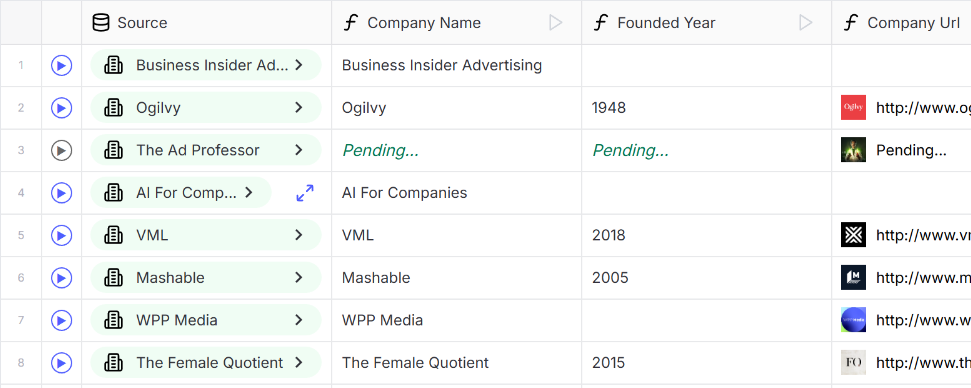
- Go to the row you want.
- Click the Play button on that row.
- Bitscale runs all workflow steps for that entry.
3. Run an entire column (one step for many entries)
Use this when you want to run one step across multiple rows.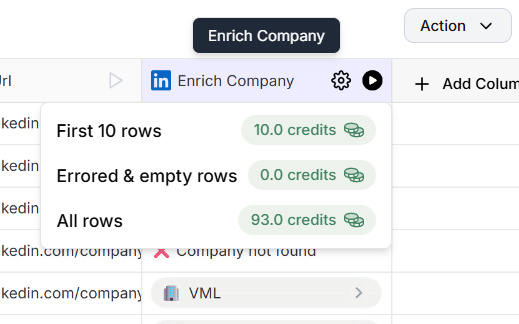
- Go to the column (workflow step) you want to run.
- Click the Play button on that column.
- Choose how you want to run it:
- first 10 rows
- errored and empty rows
- all rows
- Run it.
4. Multi-select run (all steps for selected entries)
Use this when you want to run full workflows for a subset of rows, or the whole grid.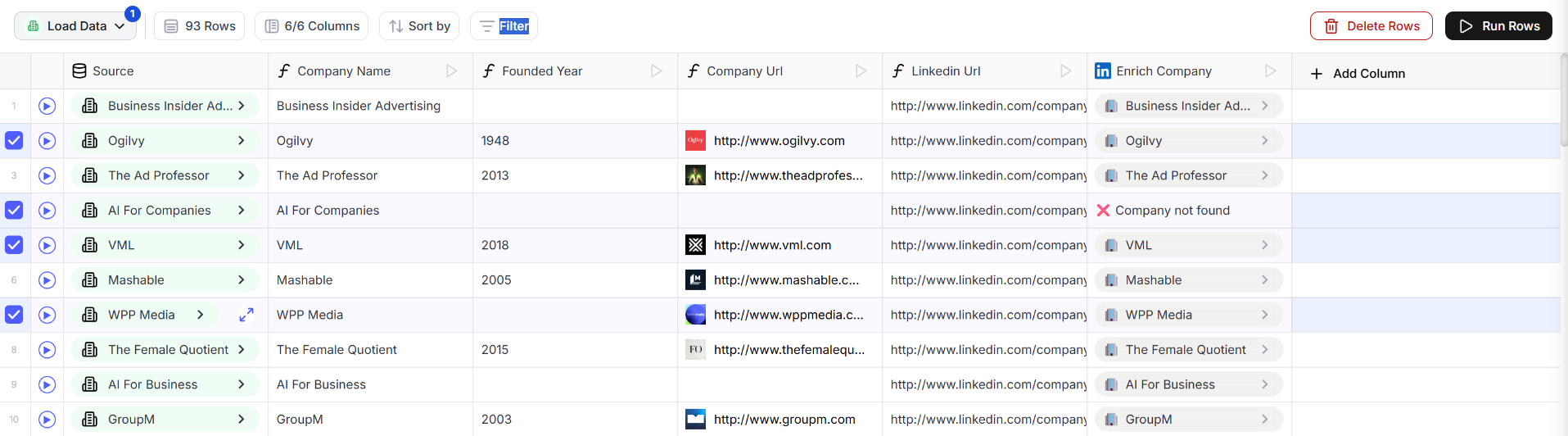
- Select rows by:
- clicking and dragging
- clicking specific rows
- selecting all rows using the select-all button
- Click Run rows.
- Bitscale runs all steps for all selected rows.
Automate your grid (auto run)
Grids are workflows, and workflows can be automated. Auto run is best when new rows keep coming in and you want the workflow to process them automatically.Option 1: Auto run when a new entry comes in (webhooks or external feeders)
If you already have a system feeding rows into a grid using webhooks or another automated source:- Enable Auto run from the bottom-right panel.
- Whenever a new entry is received, Bitscale automatically runs all subsequent steps for that entry.
Option 2: Schedule a data source, then auto run
If you do not have an external feeder system, you can still automate by scheduling your data source.- Go to the Load Data tab.
- Select the data source connected to the grid.
- Set a schedule frequency.
- from 30 minutes to monthly
- Enable Auto run.
Examples of when scheduling is useful
- Monthly schedules: CRM re-enrichment, CRM cleanup
- 30-minute schedules: new website signups, newsletter signups, routing an SDR alert, triggering outreach quickly