

Find grids fast, set up integrations, and start workflows in minutes
Try Bitscale Now!
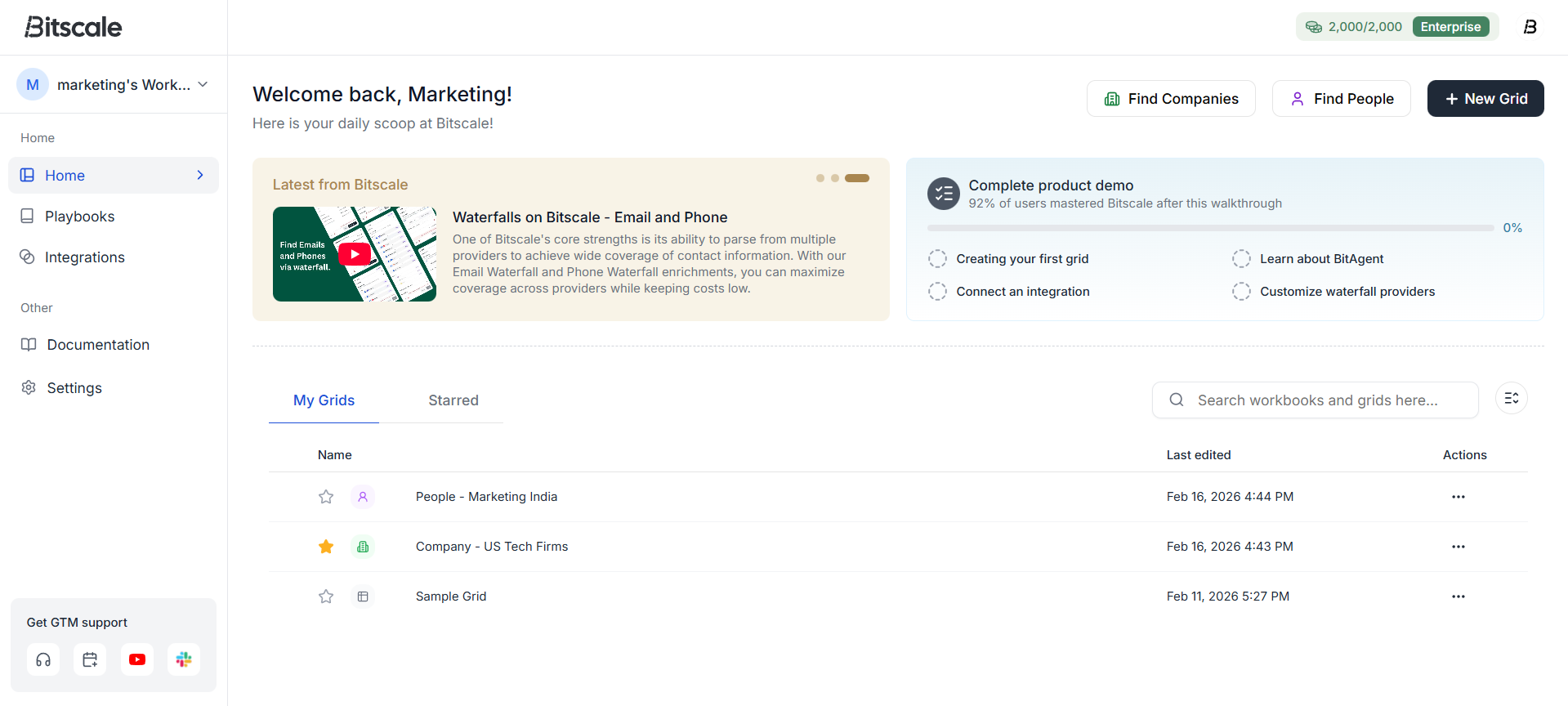
Quick ways to get started
On the homepage, you will also see:- latest documentation links
- a product demo to help you set up your first grid quickly
My Grids
This is where all your grids and workbooks are listed.- A grid is a single workflow where each row is an entity and each column is a step.
- A workbook is a multi-step workflow made up of connected grids.
Favorite a grid
- For quick access to a grid click on the star icon on a grid
- It moves into the Starred grids tab
Search grids and workbooks
Use the search bar on the homepage to find any grid or workbook by name.Get help and support
From the bottom-left section of the app, you can:- get support
- book a call with the team
- open the product walkthrough
- join the Slack community
Integrations
You can manage integrations from the Integrations tab in left sidebar.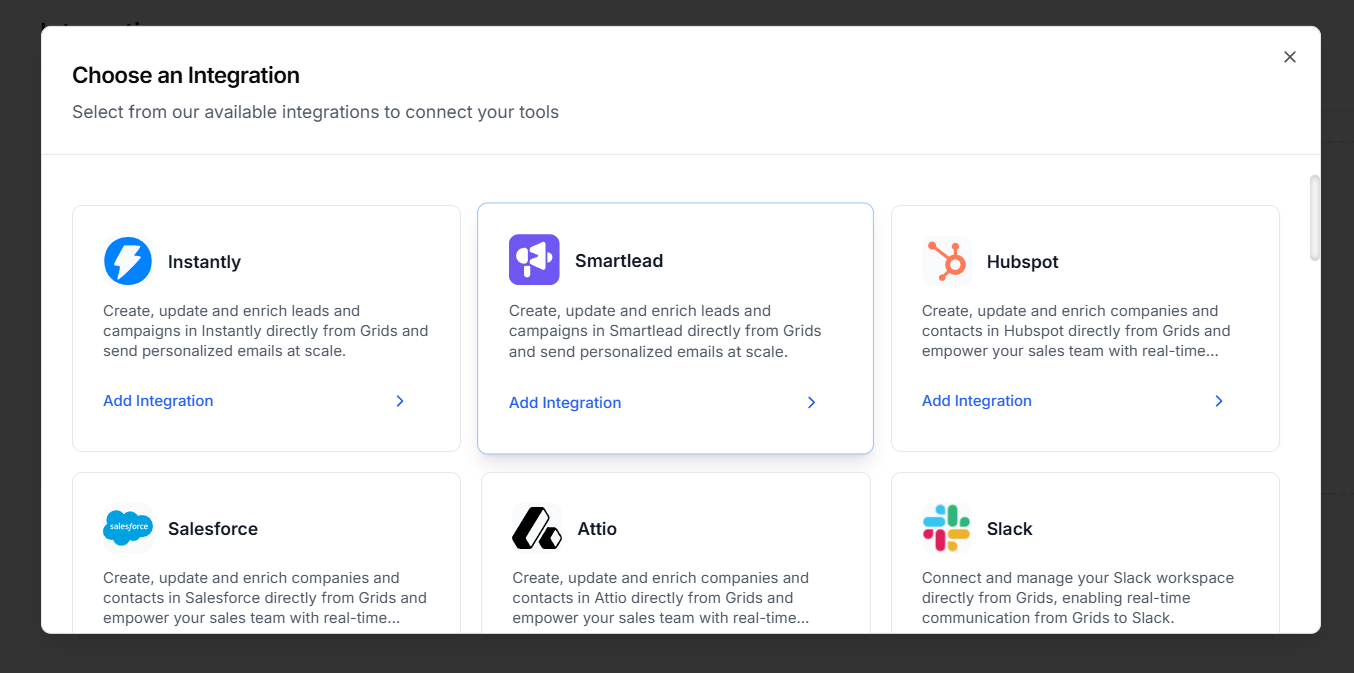 Use this when you want to:
- connect a new tool
- set up a new integration
- use your own API key (BYOK)
- request it in the community
- set up a custom API call
Playbooks
Bitscale also has Playbooks, which are ready-to-go workflows you can directly use.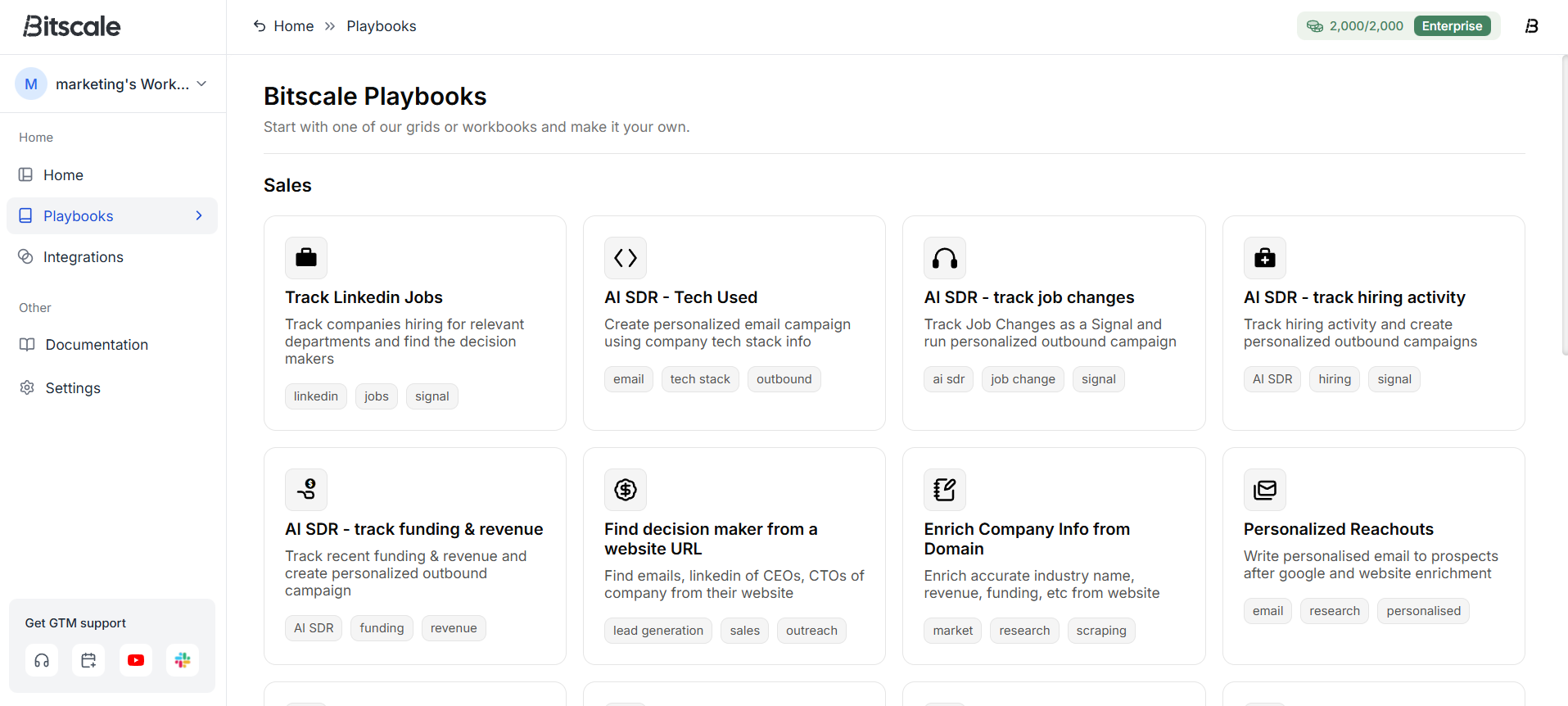
Workspaces and team access
Join a workspace
If your team uses the org/workspace setup:- Open the workspace menu
- Click Join workspace
- Search and request access (or join directly, if available)
Invite teammates
To invite others into your workspace:- Go to Settings
- Open Team settings
- Invite members
Create a new grid
Most work in Bitscale starts with creating a grid.- Click New grid
- Choose a data source
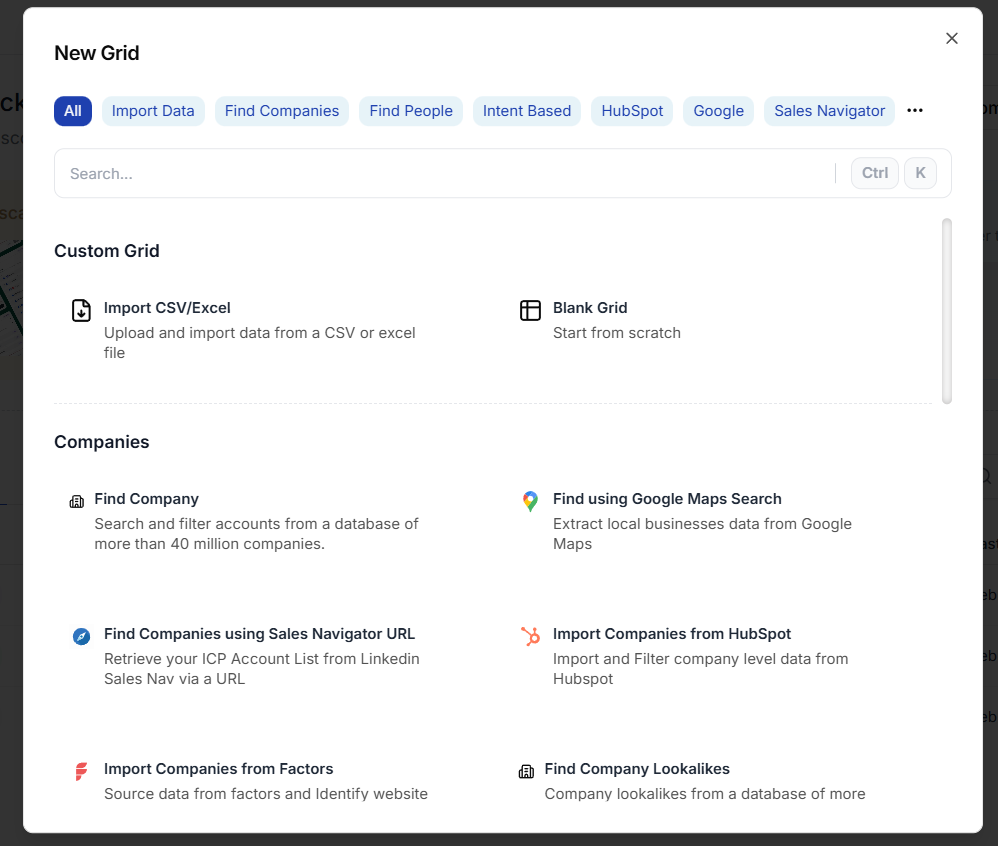 Common options include:
- import your own CSV or Excel
- create a blank grid
- import company-level data, people-level data
- LinkedIn intent-based sources
- other sources like HubSpot lists, Salesforce reports, tables, and more
Inside a grid
When you open a grid, you will see two main control areas:- a top panel for building and controlling workflows
- the main grid
- a bottom panel for automation, workflow extension, and support
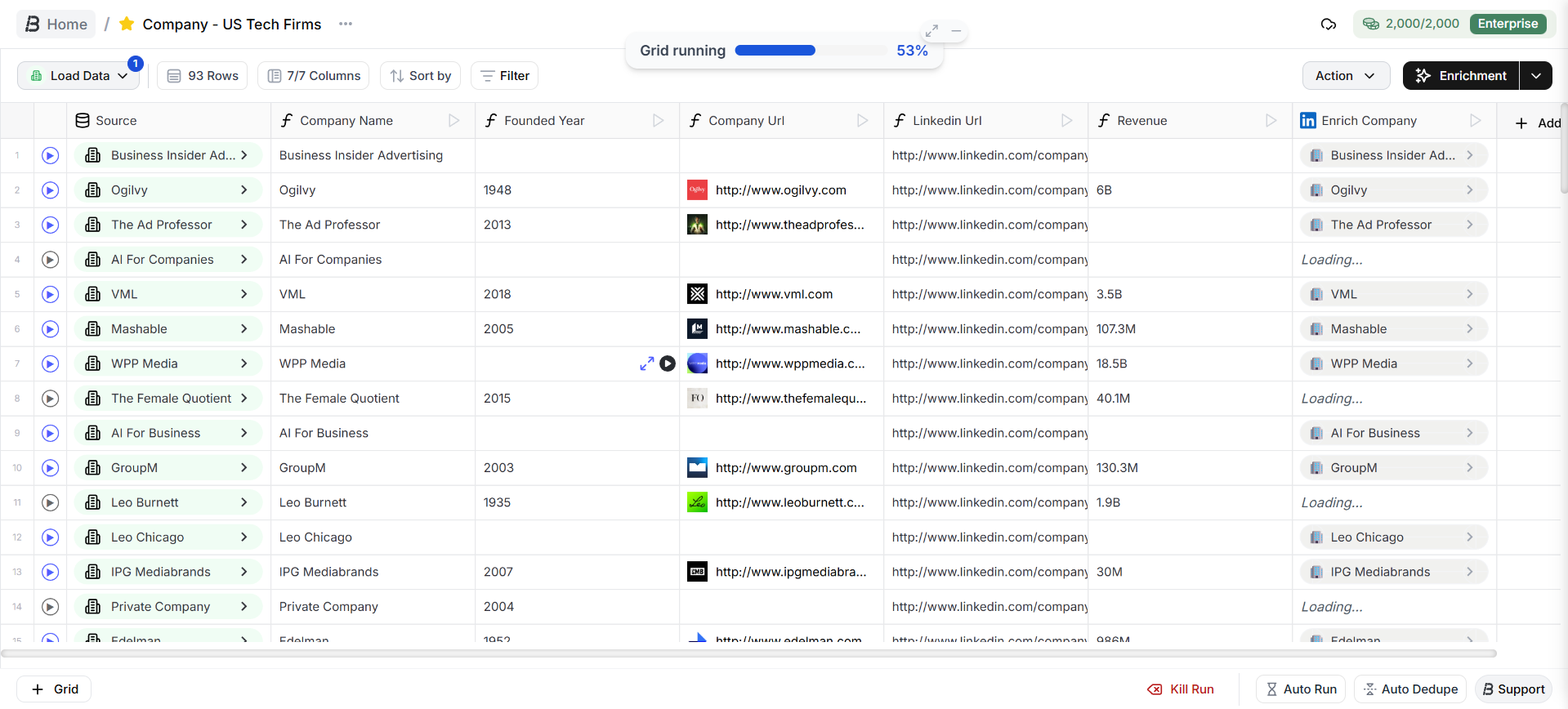
Top panel (build and control workflows)
1. Load data
The Load data button (top-left) is where you manage your data sources. You can:- attach multiple data sources to the same grid
- schedule or automate those data sources
Columns are workflow steps
Grids look like spreadsheets on purpose.- each column is a step in your workflow
- you build workflows by adding steps as columns
2. Grid Controls
Sort
Use Sort by to reorder your grid based on any column.Filter
Use filters when you only want to work with specific rows. Example: export or reach out only to people from a certain geography.Hide or show columns
As workflows get more complex, you might create intermediate columns that exist only to power later steps. You can hide those columns to keep your grid clean and focused.3. Exporting and pushing data
If you set up integrations in your workflow, you can push enriched data to:- CRMs
- outbound tools
- other connected destinations
- Go to Actions
- Export as CSV or Excel
4. Enrichments
Any step that pulls data, researches, scrapes, or generates output is called an enrichment. You can find all enrichments under the Enrichments tab.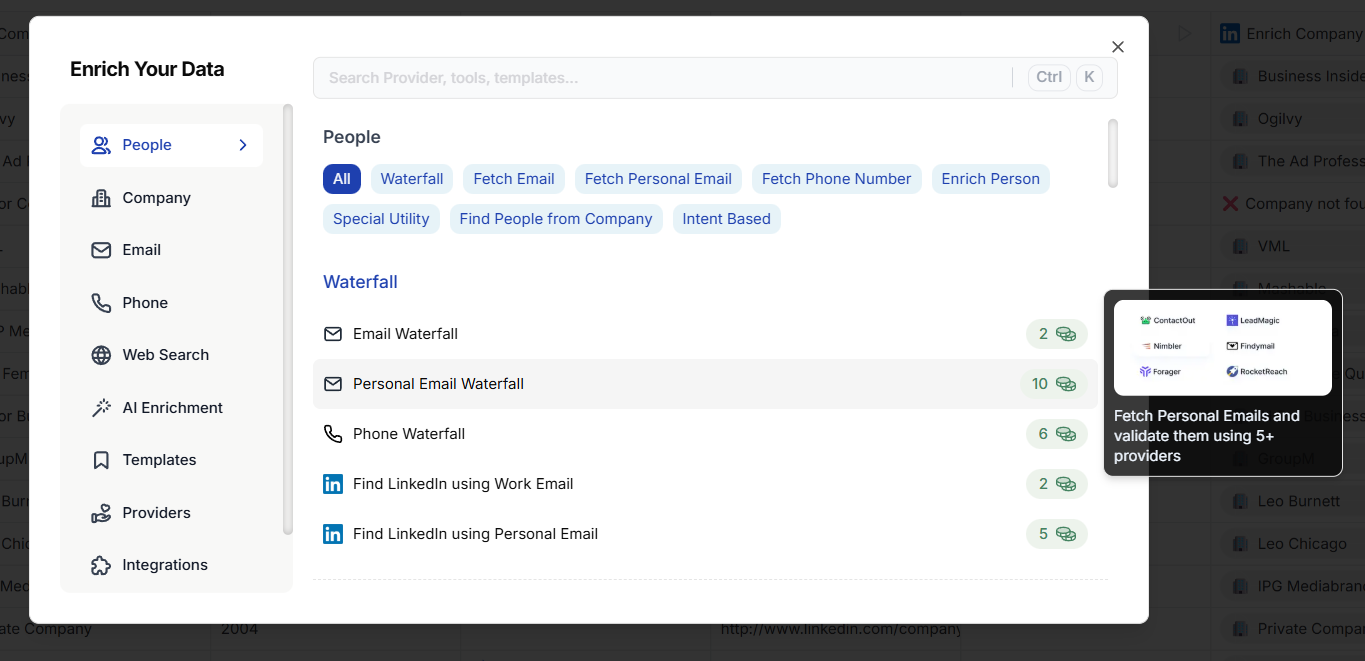 They are grouped into categories like:
- people enrichments
- company enrichments
- email enrichments
- phone enrichments
- research and web research
- AI enrichments (custom or template-based)
- integration and data movement steps (push/pull between tools)
Bottom panel (automation and workflow actions)
1. Convert a grid into a workbook
If you want to extend a grid into a multi-grid workflow:- Click the plus button
- Pick the data source for the next grid
- Bitscale creates the next grid in the workbook
2. Auto run and auto dedup
- Auto run to automate workflow runs
- Auto dedup to reduce duplicate entries
3. Bitscale Support
Access support and documentation from this tabFind grids fast, set up integrations, and start workflows in minutes
Explore the platform now!